
By Anaïs Dernis
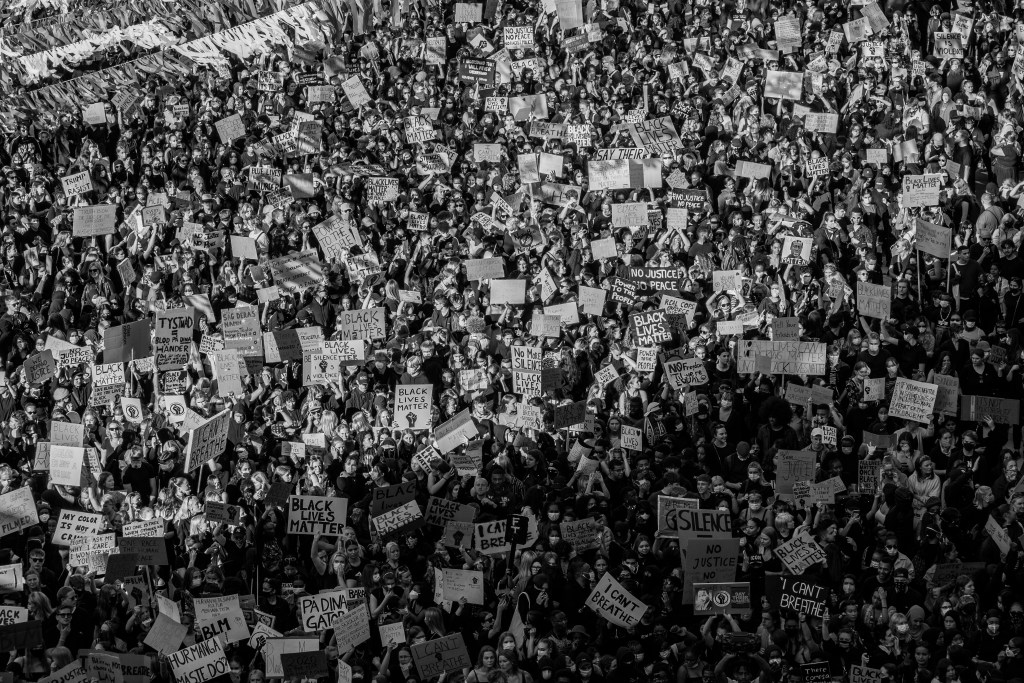
In mid-September, around the start of this academic year, secondary school teachers in the suburbs of Paris went on strike. They were soon joined by pupils who blockaded the school entrances, igniting nationwide protests about the state of France’s education system. They voiced anger over teacher shortages (often leading to excessive class sizes of up to 39 students), outdated buildings and a lack of resources. The unrest continued into October, with some peaceful protests descending into raucous rioting.
Why do the French seem so ready to take to the streets, while the British often prefer to grumble from the sidelines?
The immediate causes and effects of these protests are important, especially with the next round of French elections planned for early 2027. But as events unfolded, I began to consider a wider question: why do the French seem so ready to take to the streets, while the British often prefer to grumble from the sidelines? As a bi-national university student with a British mother and a French father, and having grown up between the two cultures, I am interested in viewing these protests from both sides of the Channel. From the Suffragettes to Extinction Rebellion, Britain is certainly no stranger to manifestations, yet large-scale protests feel somehow more deeply embedded in French political culture. When French students take to the streets, they are following in the footsteps that stretch back generations.
So, what makes these two countries so different?
Learning to Question
Ironically, my first train of thought led me to the French education system, specifically the French Baccalaureat (“Bac”) and how it compares to the British A-Level equivalent. As a teenager who wished to pursue both physics and literature, I was always intrigued by the Bac’s traditional emphasis on philosophy and history, requiring all students to study them regardless of whether their other chosen subjects were humanities or the sciences. Comparatively, having gone through the British education system, I had barely considered Plato or Kant before meeting philosophy as a student in Durham. My younger sister is now studying Philosophy A-Level but from her cohort of around 200, her class holds a meagre 3 students.
For many students, philosophical thinking of this kind remains optional, therefore, questioning the world around them may not come to them as easily
Why does this matter?
Potentially, an education that encourages young people to question ideas helps foster a culture in which challenging authority seems natural. If, at 18, French students find themselves grappling with questions such as ‘does the state owe us anything?’ and ‘can science satisfy our need for truth?’, is it any wonder that they view their society in a more critical way than I do? Of course, British education develops critical thinking too. But, for many students, philosophical thinking of this kind remains optional, therefore, questioning the world around them may not come to them as easily.
The Legacy of Revolution
Then there is the question of history.
Britain has its own rich tradition of political protest. Movements from the Suffragettes to the mining strikes and more recent environmental campaigns have sculpted British society. But nothing in the story of modern Britain quite compares to the place the French Revolution holds in France’s collective memory. The Revolution did not simply reform the country, it decisively sliced France’s history into pre and post formation of ‘La Republique’, transforming the relationship between citizen and state. From it emerged an enduring national ideal: power ultimately belongs to the people.
Even the two countries’ national anthems hint at the difference. France’s La Marseillaise calls citizens to ‘march’ against ‘tyranny’ and form their battalions. Britain’s God Save the King, by contrast, asks that the monarch be ‘long to reign over us’.
Protest in France can feel less like a breakdown of the political system and more like participation in it, an expression of citizenship itself
One evokes citizens rising to defend the nation. The other celebrates continuity and the Crown. This is perhaps an imperfect comparison, but it is a revealing one. Moreover, it may help explain why protest in France can feel less like a breakdown of the political system and more like participation in it, an expression of citizenship itself. This attitude is visible in the current unrest where French teachers and parents are joining their children on blockades as a show of solidarity. On social media I was particularly struck by interviewed parents who, rather than being embarrassed, seemed proud of their children who are speaking their mind and asking more of their government.
Conversely, for the British, protesting and striking is far less normalised. The first reaction to a strike is often rather different: how am I going to get to work?
Pride, Patriotism and Protest
The consideration of culture leads to the very intertwined concepts of pride and patriotism. Perhaps the clearest example of the cultural divide between French and British nationalism can be seen within my own family. My French father has lived in Britain for more than 30 years, yet has always resisted taking a British passport, partly because he refuses to swear allegiance to the Crown. To him, it is the principle that matters. His Republican identity, and the history behind it, remain a source of pride.
Perhaps the difference is simply that the British protest in their own way: while the French build a barricade and storm the streets, the British form an orderly queue to complain about the inconvenience caused
Growing up between two cultures means I have often contemplated national identity and patriotism. For a while I was under the impression that the French culture had more to be proud of: it seemed as though France had more of an artistic presence and had historically offered more in terms of literature and science. Upon reflection, my thinking was clearly misguided. Admittedly, French pastries may beat fish and chips, but artists and playwrights like Shakespeare and scientists like Michael Faraday are significant figures, rivalling the likes of Voltaire and Marie Curie. Perhaps the difference in these nations is not what they have to offer but how openly we express pride in these contributions.
French national identity and pride often seem directly linked to the idea of the Republic and the rights of its citizens. Protecting France, therefore, sometimes means challenging those who govern it and demanding that the country live up to its citizens’ expectations and beliefs. This is not to say the British aren’t proud; they have their own share of passionate patriots. But British identity is fundamentally expressed differently. It is found in understated sarcasm, humour and keeping calm and polite. Dissatisfaction even has its own British language: a sigh, a raised eyebrow, maybe a strongly worded letter. Perhaps the difference is simply that the British protest in their own way: while the French build a barricade and storm the streets, the British form an orderly queue to complain about the inconvenience caused.
Two Sides of the Channel
Ultimately, neither approach is necessarily better.
France’s willingness to protest creates a population prepared to challenge authority. But as seen with recent events, political anger can easily tip into disorder and violence where original complaints risk being drowned out by destruction. Britain, on the other hand, can fall into the opposite trap. Restraint is valuable but can verge on passivity and sometimes may be too willing to accept things that ought to be challenged.
Growing up between these two cultures has made me appreciate something in both. Fundamentally, the most interesting lesson may not lie in deciding which country protests in the better way: it is more important to learn how to settle somewhere in the middle of this spectrum. Because in the end, democracy works better when citizens are prepared to challenge those in power, but only if they know when to listen and realise the point at which protest ceases to advance its cause.





Leave a Reply