
By Aarshi Majumder
Walking back from Brooks House one evening, I found myself in a situation I will never forget.
Much to my dismay, two men across the adjacent sidewalk were recording me. Their catcalls as I passed by, their cameras trailing my every movement; I felt as though I were a deer in headlights. I feared for my life, for my safety- what if they attacked me in turn? The knowledge that they had a video of me stored in their phone gallery without my consent sickened me. Terrifyingly, in the advent of minuscule, portable devices which we can carry around with ease, recording someone in public spaces is becoming more normalised. This is further aggravated with the rise of AI smart glasses.
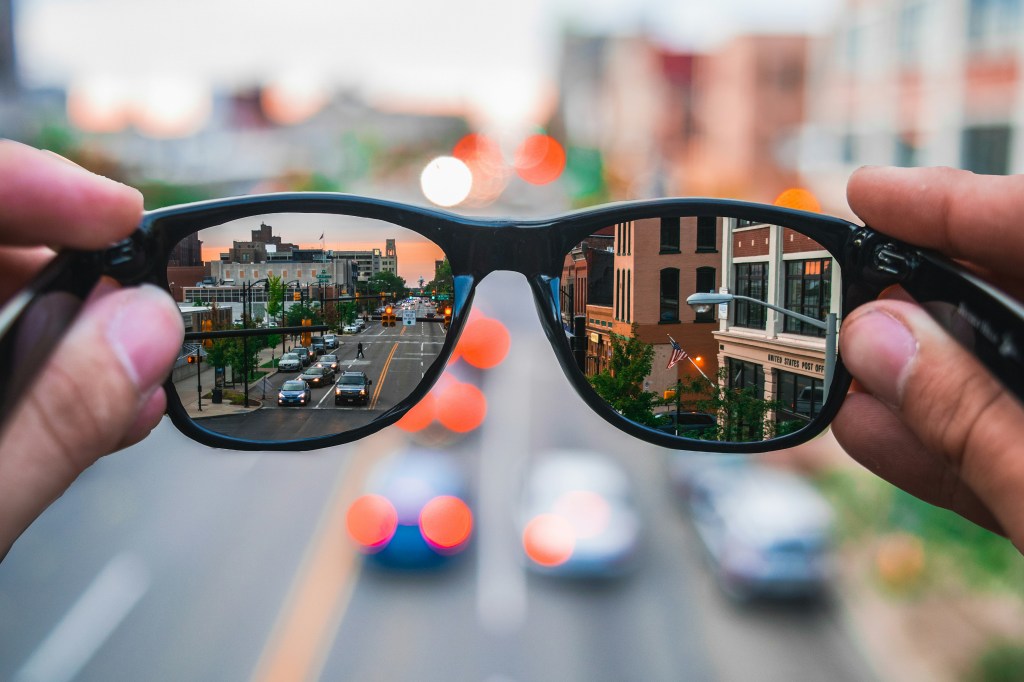
Smart glasses, often called “pervert glasses” by critics, is a form of immersive technology that contains an AI camera. For all it’s worth, it does serve as a revolutionary tool for individuals with disabilities. People with low vision or blindness can use the smart glasses to gain a description of objects they can’t see and those who are deaf can utilise the in-built speech-to-text feature. However, these appear to be strongly outweighed by the security issues smart glasses concomitantly bring. According to eu.safety.gov, 17% of smart glasses owners reported using them in prohibited ways. Research shows that women have consistently been the victims of image-based abuse, with 73% of offences in 2026 so far being against females.
To curb this, the company has developed the smart glasses with an LED light which flashes once the wearer begins recording. However, this appears to simply be a temporary solution without addressing the core issue
According to Dr. Janusz Swierczynski, bystanders’ privacy is rarely considered in corporate policies. With AI glasses, rather than just recording public spaces, they are converted into openly searchable databases where people’s intimate information is easily accessible. Recently, women have often been recorded without their knowledge in “pick up style” videos, their faces stored and tracked through Meta’s facial recognition technology. To curb this, the company has developed the smart glasses with an LED light which flashes once the wearer begins recording. However, this appears to simply be a temporary solution without addressing the core issue: it is easy to overlook the white LED light in the rush of a public setting.
In Through a Looking Glass: Meta, privacy and the law in the UK, Frederick Powel writes that an individual’s recording of someone else implicates them not only in the observation of personal information but the retention of it too. In other words, this creates an imbalance in the dynamic between the person recording and the person being recorded: the latter becomes subjugated by the former. Privacy protection laws in the UK aren’t applied in personal, non-professional capacities. For example, in January this year, 47 year-old David Williams confessed at the Warrington Magistrates’ Court to having surreptitiously recorded women while engaged in sexual activity. He escaped jail time, with only £800 in fines, £85 in court costs and a £320 surcharge. This money can never reverse the harm inflicted upon those affected. In December 2025, 17 year-old Beth Knight was unknowingly recorded by a man with smart glasses at Waterloo Station as a dating ploy, used as clout for his TikTok following. Can the safety of children and women be fully assured when it is so grossly compromised through discreet and covert means?
This creates an imbalance in the dynamic between the person recording and the person being recorded: the latter becomes subjugated by the former.
An Instagram poll, conducted on the cuths.journalism account, revealed that 82% of participants acknowledged that Meta’s AI glasses make them feel less safe. Smart glasses make producing sexualised AI deepfakes of innocent women easier, promoting cyber harassment and image-based abuse. In 2025, due to Musk relaxing moderation constraints in the AI chatbot Grok, the system created non-consensual erotic imagery of identifiable women from real photographs and videos. Over 9 days, 4.4 million images were generated, with over 41% sexually portraying real-life women and children.
A fellow classmate I interviewed (who wishes to remain anonymous) expresses their disconcertment, “there’s the feeling of being watched wherever you go.” When asked for their opinion on the recent Westminster Hall session on AI harming the safety of women and girls, they expressed doubt, “tightening voyeuristic laws is fine, but would its harm really stop unless the product itself is recalled?” In their view, celebrities promoting Meta’s AI glasses glamorise it while conveniently ignoring its negatives, ‘it’s easy to be the poster-child of a big company like Meta, the cash-out must be humongous.”
“There’s the feeling of being watched wherever you go”
On 22 May 2026, the Minister of AI, Kanishka Narayan, said that wearable products will not be regarded as a category for sexual misregulation, owing to its other various uses and functions. Generating ‘nudification’ deepfakes of individuals, using AI on real footage and images, is now banned under the Crime and Policing Act 2026.
Meta appears to show no sign of devamping its AI glasses anytime soon. Whether it will reveal a turnaround in terms of ensuring more widespread security for individuals, only time will tell.




Leave a Reply